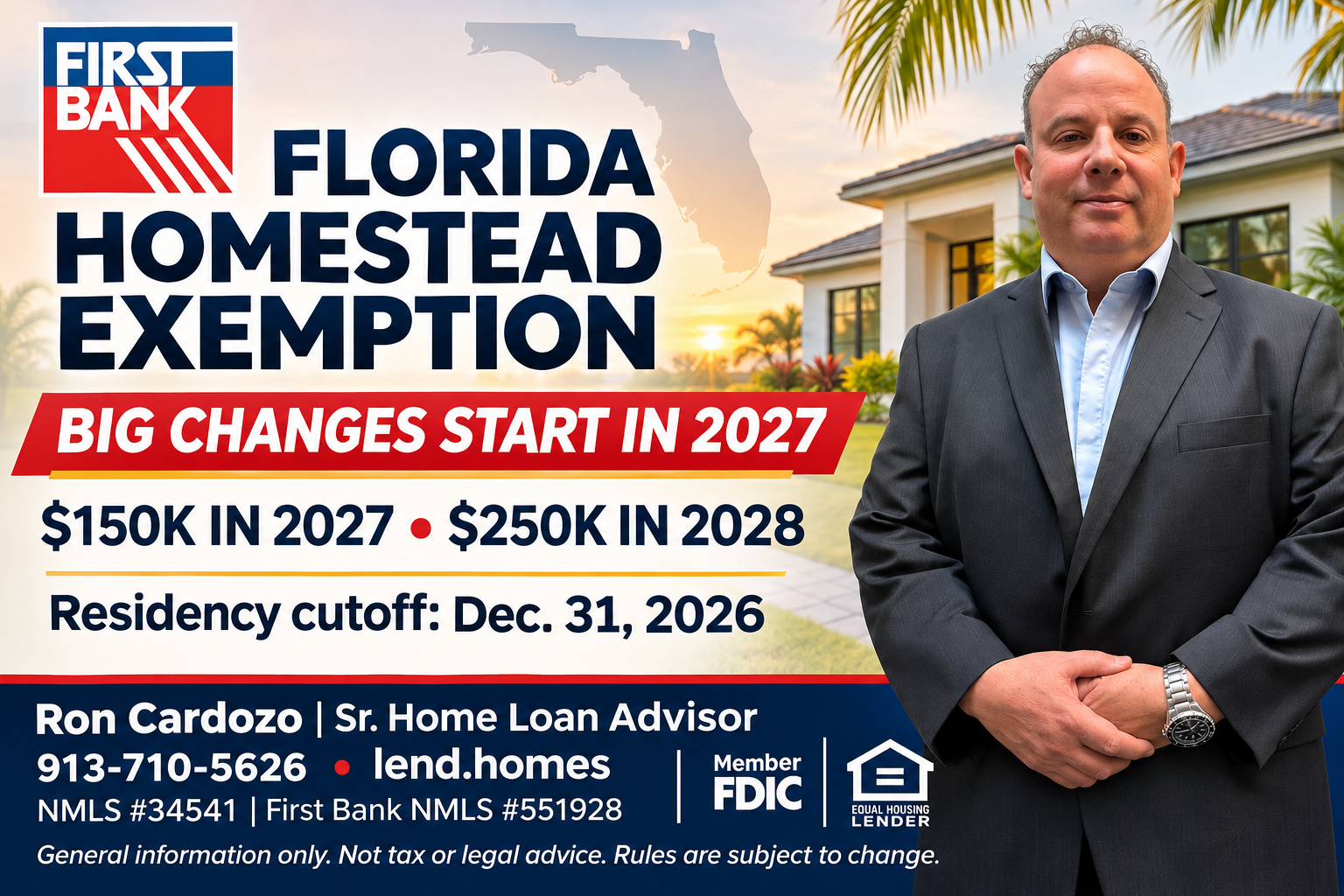
Florida's Amendment 3 Passed: What Homebuyers Need to Know Before December 31
The homestead exemption is about to get a lot bigger, but when you become a Florida resident decides how fast you get it.
On November 3, 2026, Florida voters approved Amendment 3 with about 62% of the vote. It needed 60%. The changes take effect January 1, 2027.
If you own a home in Florida, are planning a move there, or are thinking about a second home in the sun, here is what changes and what you can do about it now.
The quick version
- Bigger exemption: $150,000 in 2027 and $250,000 in 2028 on non-school property taxes, up from about $51,411 today.
- School taxes: still only the $25,000 exemption.
- Key date: be a permanent Florida resident by December 31, 2026 to get the full benefit.
- Moving later? You start at up to $50,000 and get the bigger exemption in your 5th year of homestead.
- Second homes and rentals: no bigger exemption, but the yearly cap on assessed-value increases drops from 10% to 5%.
- When you'll see it: on tax bills starting around November 2027.
1What's changing: before and after
| Item | 2026 (today) | 2027 | 2028 and later |
|---|---|---|---|
| Homestead exemption, non-school taxes | Up to ~$51,411 | Up to $150,000 | Up to $250,000, then adjusted for inflation starting 2029 |
| Homestead exemption, school taxes | $25,000 | $25,000 | $25,000 |
| New Florida residents (after Dec. 31, 2026) | n/a | Up to $50,000 non-school | Full exemption in 5th year of homestead |
| Yearly assessment cap: second homes, rentals, commercial | 10% | 5% | 5% |
| Save Our Homes cap on homesteads | 3% or CPI, whichever is lower | Unchanged | Unchanged |
2The December 31, 2026 cutoff
Dec. 31, 2026
People who are permanent Florida residents by this date get the full, phased-in exemption.
That includes renters who already live in Florida and buy a home later. Their residency date is what counts.
People who become residents after that date start with an exemption of up to $50,000 and move to the larger exemption in their fifth year of homestead.
3What could you save?
Florida TaxWatch estimates savings of about $1,035 in 2027 and $2,085 in 2028 for homesteads assessed above $250,000, using average tax rates. Your actual number depends on your county and city tax rates.
Example (for illustration only)
Homestead assessed at $350,000. We assume a non-school tax rate of 12 mills ($12 per $1,000) and an assessed value that stays the same.
| Year | Non-school exemption | Taxable for non-school | Non-school tax | Savings vs. 2026 |
|---|---|---|---|---|
| 2026 | $51,411 | $298,589 | ~$3,583 | n/a |
| 2027 | $150,000 | $200,000 | ~$2,400 | ~$1,183 |
| 2028 | $250,000 | $100,000 | ~$1,200 | ~$2,383 |
This is a hypothetical example, not a quote. School taxes are not shown because they keep the $25,000 exemption. Real bills depend on your assessed value, local tax rates, and any rate changes local governments make.
4Second homes, rentals and investment property
- Only a primary residence qualifies for the bigger homestead exemption.
- Second homes, rentals and businesses get a different benefit. The yearly limit on how much their assessed value can rise drops from 10% to 5%, starting January 1, 2027.
- That doesn't cut today's bill. It slows how fast the bill can climb in a hot market.
5The other side: local budgets
State economists estimate local governments could lose up to $12 billion a year once Amendment 3 is fully in place. Cities and counties may respond by cutting services or raising tax rates. That could shrink some of the savings, so don't count on a specific tax bill when you plan your budget.
6What this means if you're buying
Moving to Florida soon?
- Know the December 31, 2026 date and talk to the county property appraiser about what counts as permanent residency.
- Keep proof of your move date: lease, utility bills, Florida driver's license, voter registration and similar records.
- After you buy, file for homestead with the county property appraiser. The usual deadline is March 1 of the tax year.
Already have homestead?
- Several county property appraisers say you don't need to reapply. They will apply the change to eligible homes.
How it affects your mortgage
- Escrow: If your taxes are paid through escrow, a lower tax bill can mean a lower monthly payment once your escrow is reviewed.
- Qualifying: Lenders usually work from current tax figures, not future ones. Plan with today's numbers and treat the savings as a bonus.
- Second home vs. primary: How you'll use the property affects your loan options and your tax treatment. Let's get that right from day one.
Thinking about a move or a second home?
I'll help you review the numbers, your loan options and your timing so you can decide with confidence.
Call or text 913-710-5626 Visit lend.homes913-710-5626 · [email protected]
General information, not tax or legal advice. Amendment 3's implementing rules have not been finalized and may change. Estimates and examples are for illustration only. Your tax savings depend on your property, your county and city tax rates, and future legislation. For questions about your eligibility, contact your county property appraiser or a qualified tax professional. Ron Cardozo, NMLS #34541. First Bank Mortgage, NMLS #551928. Member FDIC. Equal Housing Lender. All loans subject to credit approval. Programs, rates and terms are subject to change without notice. Loan availability depends on property location and licensing.
Sources: Spectrum News 13 · Miami-Dade Property Appraiser · Volusia County Property Appraiser · Palm Beach County Property Appraiser · Seminole County Property Appraiser · St. Augustine Record · Florida Phoenix · Daytona Beach News-Journal · CBS12


