When Does Refinancing Actually Make Sense? The Break-Even Test
By Ron Cardozo, Senior Home Loan Advisor, First Bank Mortgage | Lend.homes, Your Lender for Life
Rates dipped, your neighbor refinanced, and the ads are everywhere. Should you refinance too? Maybe. But a lower rate doesn't automatically mean a good deal. Refinancing has costs, and it only makes sense if the savings outweigh them in the time you'll keep the loan.
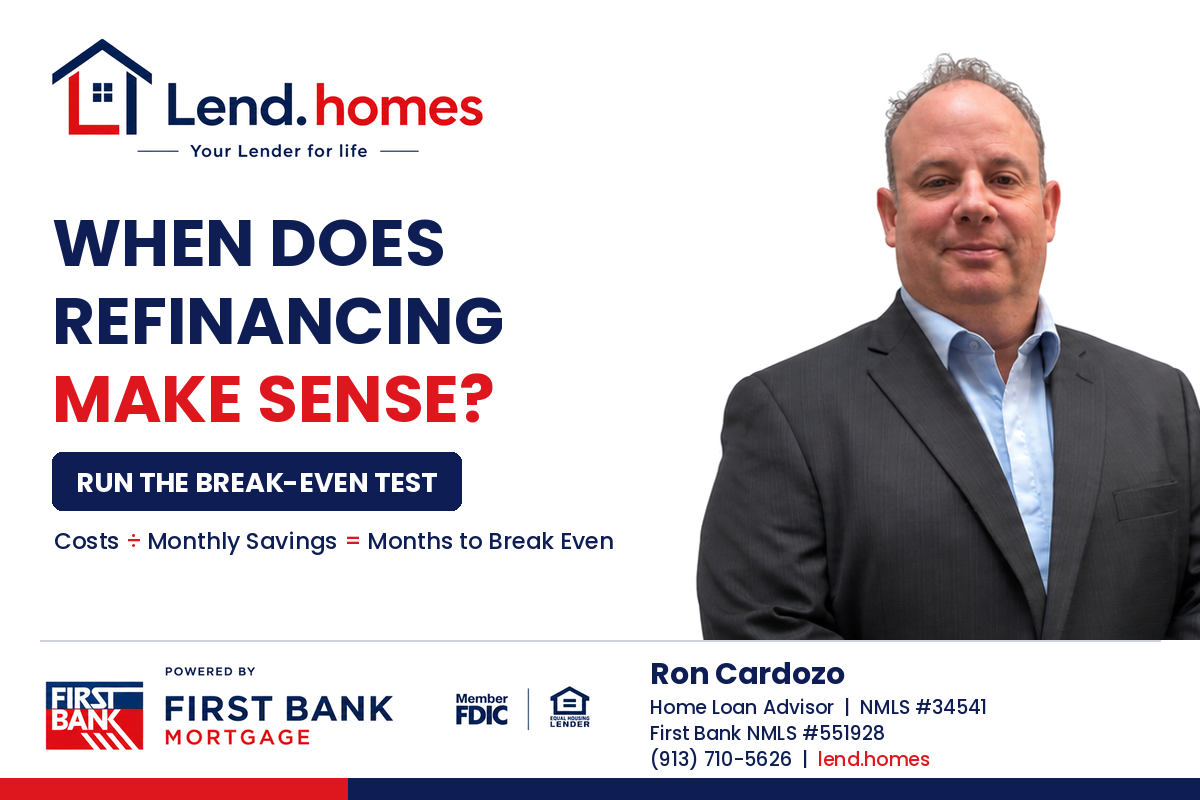
The short version: divide your total refinance costs by your monthly savings. That's how many months it takes to break even. If you'll keep the loan well past that point, refinancing may be worth it.
The Break-Even Test
Total refinance costs ÷ monthly savings = months to break even
For example, if it costs a certain amount to refinance and you save a set amount each month, the break-even point tells you how long before you're truly ahead. If you plan to move or refinance again before that point, the refinance probably isn't worth it.
Make sure you compare the same things: principal and interest before and after, not your whole payment including escrow.
Good Reasons to Refinance
Lower your rate and payment. The classic reason, when the numbers pass the break-even test.
Remove mortgage insurance. If your home's value has grown, refinancing an FHA loan into a conventional loan may eliminate MIP.
Move from an ARM to a fixed rate. Lock in stability before your rate adjusts.
Shorten your term. Going from a 30-year to a 15-year loan can save significant interest, though the payment is usually higher.
Remove a borrower, such as after a divorce.
Tap equity. A cash-out refinance turns equity into cash. Read my cash-out refinance guide.
Watch Out for These Traps
Resetting the clock. If you're years into a 30-year loan and start a new 30-year loan, you may pay more interest overall even with a lower rate. Consider a shorter term.
Rolling in costs. Financing closing costs lowers your upfront cash but raises your balance.
"No-cost" refinances. The costs are usually covered by a higher rate. That can work, but know the trade-off.
The "1% rule." It's a rough guideline, not a rule. A smaller rate drop can make sense on a large loan, and a bigger drop may not on a small one.
Alternatives to Refinancing
A mortgage recast: make a lump-sum payment and have your payment recalculated while keeping your rate. See How a Mortgage Recast Works.
Request PMI removal on a conventional loan once you have enough equity.
A HELOC instead of a cash-out refinance, if you want to keep a low first-mortgage rate.
What to Have Ready
Your current mortgage statement
Recent pay stubs, W-2s or tax returns
Recent bank statements
Your homeowners insurance information
A rough idea of how long you plan to stay
Frequently Asked Questions
How soon can I refinance after buying?
It depends on the loan type and the kind of refinance. Some programs have waiting periods.
Will I need an appraisal?
Usually, though some streamlined refinances may waive it.
Does refinancing hurt my credit?
There's a credit inquiry and a new account, which may cause a small, temporary dip.
 | Is Refinancing Worth It for You?Send me your current mortgage statement. I'll run the break-even math and tell you honestly whether it makes sense. Ron Cardozo, Senior Home Loan Advisor |
 |  |
Important information: This article is for general educational purposes only and is not a loan offer, rate quote, or commitment to lend. Refinancing involves closing costs, and extending your loan term may increase the total interest paid over the life of the loan. Mortgage insurance removal, recast availability, and refinance waiting periods vary by loan program and servicer. First Bank Mortgage cash-out refinances are limited to a maximum of 80% loan-to-value. Final loan approval is subject to credit approval, underwriting guidelines, verification of income and assets, appraisal, title, and property eligibility. Program availability, terms, and eligibility requirements vary and may change without notice. Not all applicants will qualify.
Ron Cardozo, NMLS #34541. First Bank Mortgage, NMLS #551928. 6201 College Blvd, Suite 100, Overland Park, KS 66211. Member FDIC. Equal Housing Lender.


