When Should I Lock My Rate, How Long Does It Last, and What Does It Cost?
By Ron Cardozo, Sr. Home Loan Advisor, First Bank Mortgage | Overland Park, KS
Mortgage rates can change every day, sometimes more than once a day. That means the rate you see when you apply isn't guaranteed until you lock it.
A rate lock protects you from rising rates between your loan offer and closing. But it only works if it's long enough to cover your closing date, and the length and cost of a lock vary by lender.
Here's when to lock, how long locks typically last, what they can cost, and what to ask before you commit.
What a Rate Lock Is and How Long It Lasts
According to the CFPB, a rate lock means your interest rate won't change between your loan offer and closing, as long as you close within the lock period and nothing changes on your application.
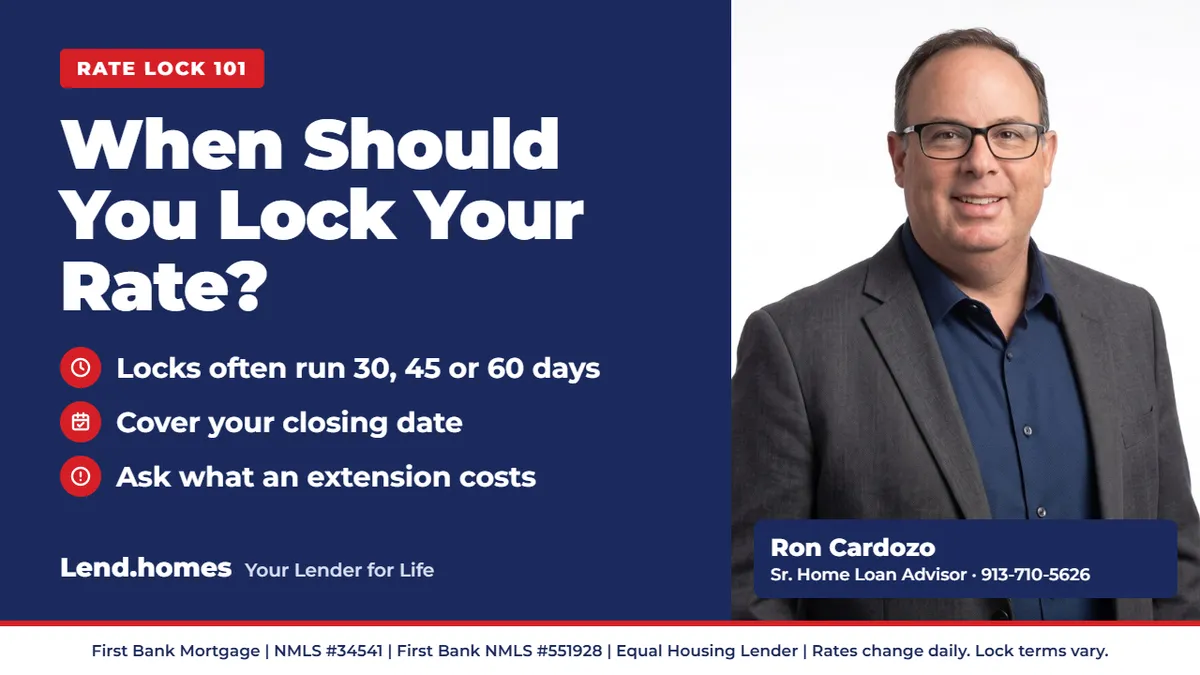
- Typical lock periods: 30, 45 or 60 days, and sometimes longer.
- Where to see it: page 1 of your Loan Estimate shows whether your rate is locked and when the lock expires.
- The trade-off: once you lock, you're protected if rates rise, but if rates fall, you may not get the lower rate.
The key is matching the lock to your timeline. Your lock should last at least until your scheduled closing date, with a little cushion for delays.
When Should You Lock?
For most buyers, the right time to lock is after you have an accepted offer on a home, once you know your closing date and loan amount. Before that, there's nothing to lock the rate to.
When deciding exactly when to lock, consider:
- Your closing date. Choose a lock period that covers it, plus some breathing room for appraisal, title or underwriting delays.
- Your budget. If a small rate increase would strain your payment, locking sooner can give you peace of mind.
- The market. Nobody can predict where rates will go day to day. Trying to time the bottom can backfire if rates rise instead.
- Your loan details. Your loan type, down payment and program should be settled, since changes can affect a locked rate.
For a refinance, you can typically lock once your application is underway and you're ready to move forward. I'll help you pick the right timing based on your closing date and goals.
What Does a Rate Lock Cost?
It depends on the lender and the length of the lock. In general:
- Standard lock periods are often built into your pricing, with no separate fee.
- Longer lock periods may come with a slightly higher rate or a fee, because the lender is holding that rate for you longer.
- Extensions can be expensive. The CFPB warns that extending a lock can be costly, and that your Loan Estimate won't show what an extension or a different lock period would cost. That's why it pays to ask up front.
If your closing might take longer, for example with new construction or a complex purchase, ask about a longer lock now rather than paying to extend later.
What Can Still Change a Locked Rate
A lock protects you from market changes, not from changes to your loan. According to the CFPB, your rate can still change if:
- You change your loan type or down payment
- Your appraisal comes in higher or lower than expected
- Your credit score changes, for example from a new loan or a missed payment
- Overtime, bonus or other income can't be documented
That's one more reason to avoid big financial changes until after closing.
Questions to Ask Before You Lock
- How long is the lock, and does it cover my closing date?
- Is there a fee for this lock period, or for a longer one?
- What does an extension cost if closing is delayed?
- What happens if my lock expires before I close?
- If rates drop after I lock, is there any option to get a lower rate?
- Can I get the lock confirmed in writing?
Getting clear answers now helps you avoid surprises if your closing timeline shifts.
Frequently Asked Questions
Can I lock my rate before I find a home?
Usually you lock once you have an accepted offer and a closing date. Until then, I can keep you updated on the market and your pre-approval.
What happens if my lock expires before closing?
You may need to extend the lock, which can cost money, or your rate could be repriced at current market rates. Ask your lender how they handle it before you lock.
If rates go down after I lock, do I get the lower rate?
Not automatically. Locking protects you from increases, but you typically keep your locked rate if rates fall. Some lenders offer options for that situation, so ask what's available.
Does locking my rate guarantee my loan approval?
No. A lock protects your rate, but your loan still has to be approved, and changes to your application can affect it.
Will I see my lock in writing?
Yes. Your Loan Estimate shows whether your rate is locked and when the lock ends, and you can ask for a written lock confirmation.
Let's Lock in With Confidence
I'll help you choose the right time to lock and a lock period that fits your closing date, and I'll explain any costs up front, so there are no surprises if your timeline changes.
Have questions about locking your rate? Call or text me.

Ron Cardozo | Sr. Home Loan Advisor
Call/Text: 913-710-5626
Email: [email protected]
Web: www.RonCardozo.com
Lend.homes: www.Lend.homes
About Ron: I've helped homebuyers in the mortgage industry since 1998 and am a Five Star Mortgage Professional award recipient. I serve the Kansas City metro on both sides of State Line and the Lake of the Ozarks, with an office at 6201 College Blvd, Suite 100, Overland Park, KS 66211. Lend.homes, Your Lender for Life.
First Bank Mortgage | NMLS #34541 | First Bank NMLS #551928 | Equal Housing Lender. This article is for general educational purposes only and is not a commitment to lend, an offer of credit or a rate quote. All loans are subject to credit approval, underwriting guidelines and property eligibility. Interest rates change daily and are not guaranteed until locked. Lock periods, fees, extension costs and policies vary and may change without notice. Not all borrowers will qualify.


